What Is Phase 1 Orthodontics?
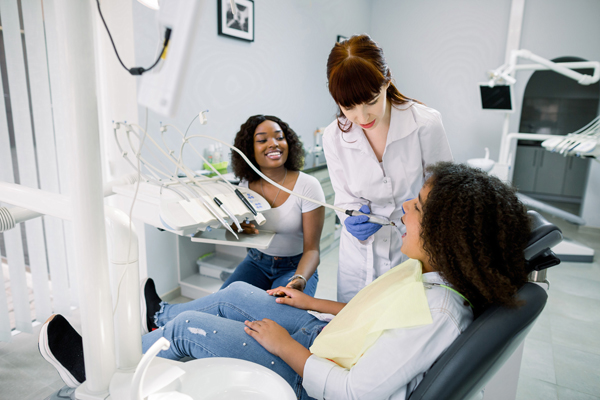
Phase 1 orthodontics typically starts around the ages of six to nine. The American Association of Orthodontists recommends bringing children in for a bite evaluation no later than their seventh birthday. At this point, their bites should be developed enough to identify potential problems, and the soft structures of their facial structures are easier to mold.
Understanding phase 1 orthodontics
Phase 1 orthodontics focuses on addressing orthodontic issues before they turn into more severe problems later in a child’s life. It gives the orthodontist a chance to address issues like abnormalities in the patient’s jaw structures or insufficient space for all of their permanent teeth.
Some of the benefits of getting children early orthodontic treatments include:
- It improves the appearance of the child’s teeth, improving their self-esteem
- It can help to correct bad habits like thumb sucking
- It typically leads to shorter treatments with corrective oral appliances like braces
- It helps with speech development
- It ensures there is enough space on the child’s jaw for all of their permanent teeth
- Reduces the chances of developing impacted teeth
Orthodontic appliances like braces are typically used to help fix bite issues. Treatment times are unique for each patient, but they are typically anywhere from nine to twelve months. Adults who need orthodontic treatments often have to wear their appliances for somewhere between 12 to 36 months. At this point, their facial structures have hardened, making it harder to mold them.
Phase 1 orthodontic treatment options
There are several treatment options available in this phase of orthodontic treatment that can help correct a child's bite issues. These treatment options include the following:
Headgear
These are used to correct a child’s bite and to promote proper jaw growth and alignment. They are typically recommended when a child's bite is severely misaligned. The appliance is worn partially out of the mouth for about 12 hours daily.
Braces
Phase 1 orthodontics might include a limited phase of braces on specific teeth. Braces are one of the oldest oral appliances used to straighten teeth, and they work by applying a gentle pushing force on the patient’s teeth. They are made of brackets and wires that are attached to the patient’s teeth. The wires are adjusted periodically to increase or decrease the forces applied to the child’s teeth.
Retainers
Retainers are used to keep a child's teeth properly aligned after orthodontic treatments. Retainers can also be used to fix minor orthodontic issues. How long a child needs to wear retainers varies based on the severity of the orthodontic issue treated.
Space retainers
These devices are used to keep the space left by a lost baby tooth. Baby teeth guide the permanent teeth behind them and prevent the remaining teeth from shifting towards the space. Covering the space with a maintainer helps to stop this from happening.
Protect your child's bite
Spotting orthodontic issues early on helps to prevent them from turning into more severe issues later on. Call or stop by our Franklin Lakes to set up an appointment with our orthodontist so your child’s bite can be examined.
Request an appointment here: https://asterorthodontics.com or call Aster Orthodontics at (551) 209-1243 for an appointment in our Franklin Lakes office.
Check out what others are saying about our services on Yelp: Read our Yelp reviews.
Related Posts
There are now more options than ever for teenagers to reliably and quickly straighten their teeth. Whether you simply want the best results or strongly desire a more discreet treatment, there is an option for you.Here, we discuss the various types of braces for teens, highlighting the differences between each and when one may be…
Considering Invisalign® to correct crooked or crowded teeth? Read on to learn more about this teeth-straightening treatment option. This method for teeth straightening has grown to be quite popular, and with good reason. However, it is still considered relatively new in comparison to traditional metal braces.Outlined below are some of the most frequently asked questions…
It may take a few days to become accustomed to Invisalign®, as with any orthodontic device. Continue reading to find out more about how Invisalign may affect speech. Invisalign trays fully cover the teeth, giving them a somewhat thicker appearance and feel. Some individuals may notice a little, transient alteration in their speech for the…
If you have had braces in the past, you may want to try Invisalign® to correct any crooked teeth that shifted back. Read on to learn more. Fortunately, you can receive Invisalign aligners despite having already had braces. Interestingly, those who have to undergo teeth straightening for a second time usually go for Invisalign instead…